|
Symbol |
Meaning |
|---|---|
|
Apples & root vegetables |
Nourishment, stored resources, and the practical comforts that sustain you through winter. |
|
Owl |
Discernment in uncertain times; knowing when to make yourself visible and when to step back. |
|
Rosemary |
Remembrance and protection; honouring what you have inherited and what you want to carry forward. |
|
Obsidian |
Honest self-reflection, protective boundaries, and facing what lies beneath a sense of security. |
|
Cedarwood & pine |
Shelter, resilience, and grounding; creating a sense of sanctuary as the evenings darken. |
The Hunter’s Moon 2026: Carve a Manifestation Lantern
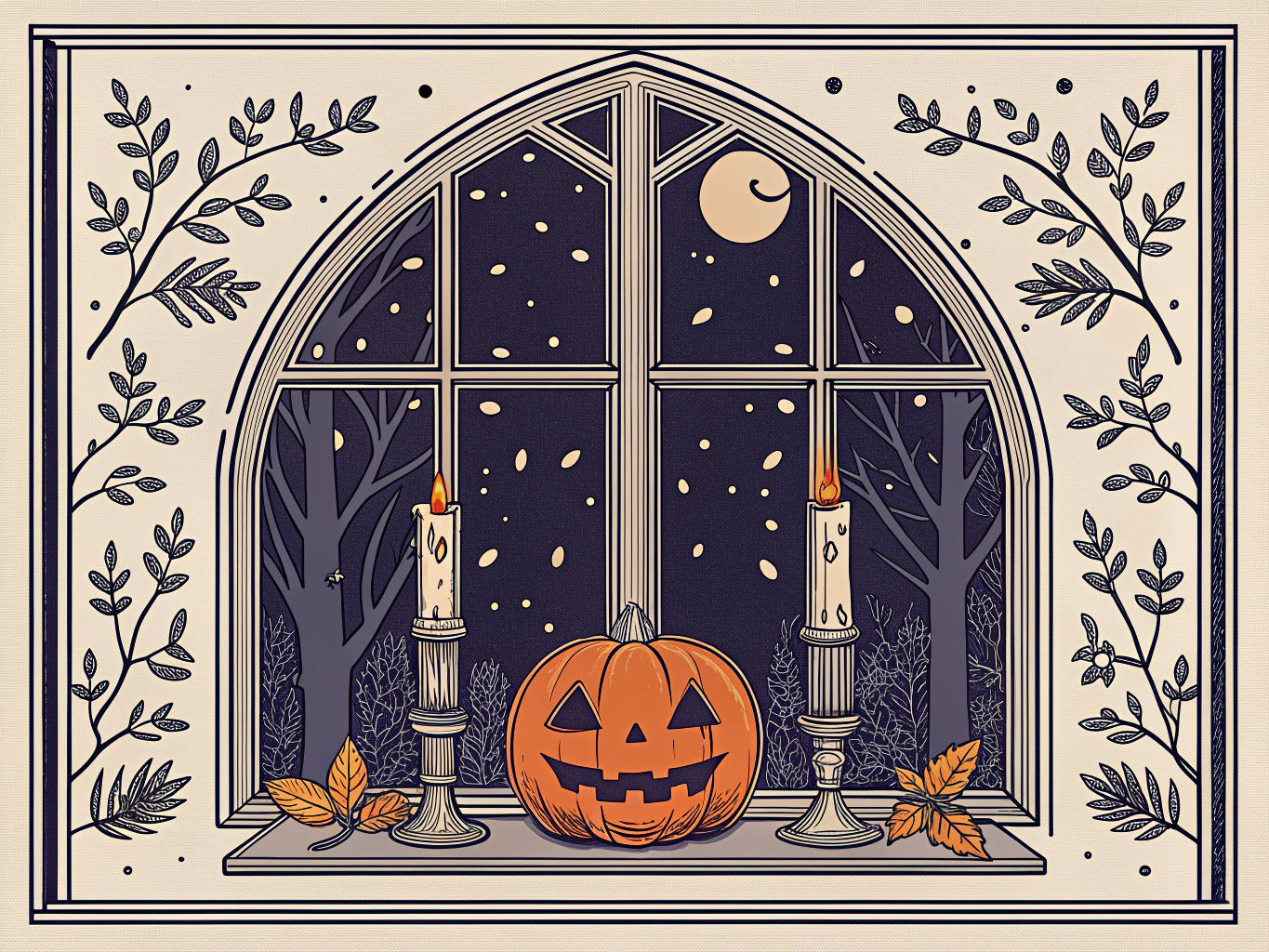
The Hunter's Moon reaches fullness on 26 October 2026 at 4:12 am BST in the UK.
Author: Megan Williams
The Hunter's Moon
The Hunter’s Moon is primarily associated with the traditional timing for hunting and preserving meat in preparation for the upcoming winter. As the first full moon following the Harvest Moon, it shines brightly over fields that have already been cleared of crops, making it significantly easier for hunters to spot animals that have spent the summer fattening up on autumn grains. Because it rises shortly after sunset for several consecutive nights, this moon historically provided an extended "midnight lamp" of light for tracking game.
The Hunter’s Moon on 26 October 2026 brings a question into focus: when does comfort support us, and when does it hold us back? With the Full Moon in Taurus opposite the Scorpio Sun, I’m exploring security, chosen challenges, and a pumpkin-carving ritual for transformation as Halloween approaches.
A question of worth
October’s Hunter’s Moon arrives with the year turning towards darker evenings, drawing us towards warmth, shelter, harvest, and preparation for winter.
For this Taurus–Scorpio Moon, the symbolism acts as an invitation to reflect on the cost of comfort.
In astrology, Taurus points to the comforts that sustain us: the body, money, pleasure, and familiar routines. Scorpio asks what lies beneath that security: shared resources, dependency, and the emotional agreements shaping our choices. The tension is between comfort that restores us and comfort that keeps us from testing our own capacity. Essentially, might there be places in your life where you are getting too comfortable?
The comfort paradox
I’m using comfort paradox as a shorthand for the tension caused by convenience leaving us fewer chances to practise effort, patience, and problem-solving.
Without those challenges and discomfort we would have experienced had we not found solutions for comfort, we can actually disadvantage ourselves. The struggle and successful completion or resolution of the problem can give you confidence and change your beliefs about your capabilities (self-efficacy). The greater self-efficacy you have the more likely you are to be successful and excel in future similar scenarios.
This has been shown in math, there is a correlation between a person's belief in their ability to successfully execute specific mathematical tasks and their actual math competence and performance.
So, how do we apply this to our Hunter’s Moon? Go on a hunt of your own, choose a small challenge to build your confidence in your abilities. Identify a few limiting beliefs and small actions that could prove them wrong. Start small and look for quick wins. Each little win can give you a little evidence of your own capability.
The thresholds
These ideas meet at a threshold: the point where safety meets change. Comfort steadies us; a chosen challenge shows us what that steadiness makes possible.
In folklore, Samhain (the ancient Celtic festival from which Halloween partly descends) marks the transition from the lighter half of the year into winter. In Irish and Scottish tradition, it is a liminal time: a threshold between seasons, between light and dark, and, in folklore, between the human world and the Otherworld.
Modern Samhain and Halloween traditions often speak of the “veil” between the living and the dead becoming thinner. Whether understood literally, symbolically, or simply as seasonal atmosphere, this is a time when attention turns to boundaries: household protections, hospitality, divination, and customs for welcoming or warding off unseen visitors.
One of the most familiar is the carved lantern.
A lantern at the threshold
The jack-o’-lantern has Irish roots. In the legend of Stingy Jack, a man tricks the Devil and, after death, is denied entry to both Heaven and Hell. Doomed to wander in darkness, he carries a burning coal inside a hollowed-out turnip.
Irish and Scottish communities carved frightening faces into turnips and other root vegetables, placing a light inside. The faces were said to ward off Jack’s wandering spirit and other unwelcome visitors. When Irish and Scottish immigrants settled in North America, they adapted the custom to pumpkins, which were larger and easier to carve.
What draws me to the lantern for this Moon is the meeting of those two purposes: a light to guide the way, and a face at the threshold to mark a boundary.
It makes me think of the northern white-faced owl, which can make itself appear larger or smaller to ward off predators. There’s something in that image for this Moon: meeting a challenge needn’t always mean making yourself bigger.
A carved lantern can hold both impulses: the courage to be seen, and the wisdom to know when to protect your energy.
A pumpkin for transformation
A carved pumpkin lantern feels right for this moment, holding warmth and light at the edge of the unknown.
For this Full Moon, consider a new approach and instead of carving a scary face for decoration, use the opportunity to create a piece of magic.
Come up with an affirmation, a symbol of transformation, or a sigil that speaks to you, and carve this into your pumpkin. It can hold an intention, a boundary, or a reminder of what you want your security to feel like in everyday life. The light within illuminates your intention, while the pumpkin’s gradual decay becomes part of the spell: a reminder that transformation means letting one form give way to another.
Choose an intention
“Abundance” can mean almost anything. Give your intention a shape you can act on:
- “I’m paid fairly for the work I do.”
- “My home supports rest and calm.”
- “I make room for pleasure without needing to earn it.”
- “I receive support while keeping my voice and choices.”
- “I trust my body’s signals when I make decisions.”
Turn it into a symbol
Write your intention on paper. You can distil it into a simple sigil, or choose an image that already feels meaningful:
- A doorway for a new threshold.
- A key for access and choice.
- A spiral for steady growth.
Keep the design or sigil bold. You want the light to show through it. There are several methods for creating a sigil, most commonly you would distil your desire into the fewest words, remove the vowels and repeated consonants and merge the remaining letters as overlapping shapes until you have a symbol to your liking.
Carve your lantern
- Draw your symbol on paper, then trace it onto the pumpkin.
- Scoop out the inside and mark the design with small guide holes.
- Use a pumpkin-carving tool, taking your time and keeping your hands clear of the cutting path.
- Place a tealite inside, or substitute with glow sticks or battery-operated candles
- As you light or illuminate the jack-o’-lantern, imagine the change you want to see
- Set your lantern somewhere at your chosen threshold such as a door or window
Symbols of the Hunter's Moon
Use what feels personally meaningful.
If you’d like to carry the intention beyond Halloween, create a digital vision board in Starboard. Gather images of what the change would look like in everyday life, add your affirmation, and include a photograph of your carved symbol. Choose one small action to go with it, so the board holds both the future you imagine and a step towards it.
Let it mark the kind of comfort you’re willing to build: the kind that leaves room for your needs, your standards, and your own say in the matter.